EPJ B Highlight - Uncovering the magnetic responses of anisotropic semimetals
- Details
- Published on 14 July 2025
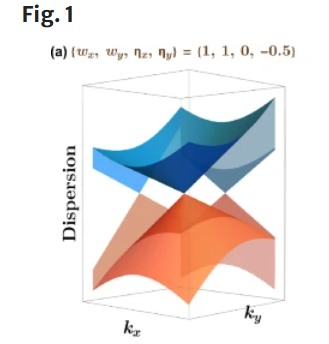
Calculations show that magnetic fields can alter the responses of anisotropic 2D semimetals to electric fields and temperature gradients – but only when applied perpendicular to the material’s plane
For solid-state physicists, graphene has become a posterchild of 2D semimetals: materials whose electronic structures fall between those of a metal and a semiconductor. Owing to the honeycomb structure of its carbon atoms, graphene hosts an orderly arrangement of Dirac cones – pairs of opposite-facing, cone-shaped energy bands that touch at a single point. Immediately surrounding such a point, electron energy varies linearly with momentum, just like for massless particles such as photons – leading to exotic and often useful electronic properties.
Through a new paper published in EPJ B, Ipsita Mandal at the Shiv Nadar Institution of Eminence, India, presents fresh calculations of how these properties vary in the presence of magnetic fields, particularly when 2D semimetals are structurally distorted. Her results show that these materials’ electrical and thermal responses are affected only when the magnetic field is oriented perpendicular to the 2D plane. This finding offers deeper insight into the electronic behaviour of semimetals – potentially broadening their already wide range of technological applications.
EPJ B Highlight - Understanding 2D Dirac semimetals in tilted magnetic fields
- Details
- Published on 09 July 2025
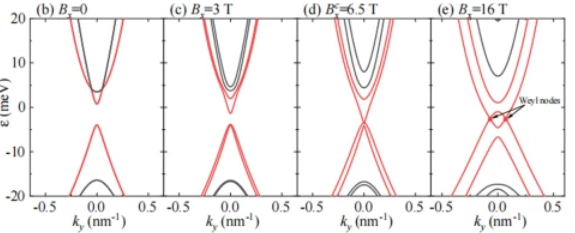
Model reveals that within ultrathin Dirac semimetal films, the transport of quantised Dirac fermions can occur in two distinct ways, depending on how the film is tilted relative to an applied magnetic field
Dirac matter is an exotic phase of matter in which quasiparticles – arising from low-energy electron excitations behave like relativistic particles – obey the rules of both quantum mechanics and special relativity. Among these systems are materials called Dirac semimetals, which are characterised by discrete points where their conduction and valence bands touch, forming a linear energy–momentum relationship. Today, physicists are especially interested in the unusual topological phases that can emerge when Dirac semimetals are fabricated into ultrathin 2D films.
Through theoretical analysis published in EPJ B, Rui Min and Yi-Xiang Wang at Jiangnan University, China, investigate how Dirac fermions are transported in thin semimetal films under tilted magnetic fields. Their model reveals that the quantum Hall behaviour of these materials changes in distinct ways depending on the field’s orientation – offering new insights into the topological nature of Dirac matter. Their results could lead to applications in areas including quantum computing, low-power electronics, and spin-based information processing.
EPJ B Highlight - Predicting adsorption with quantum indicators
- Details
- Published on 27 June 2025
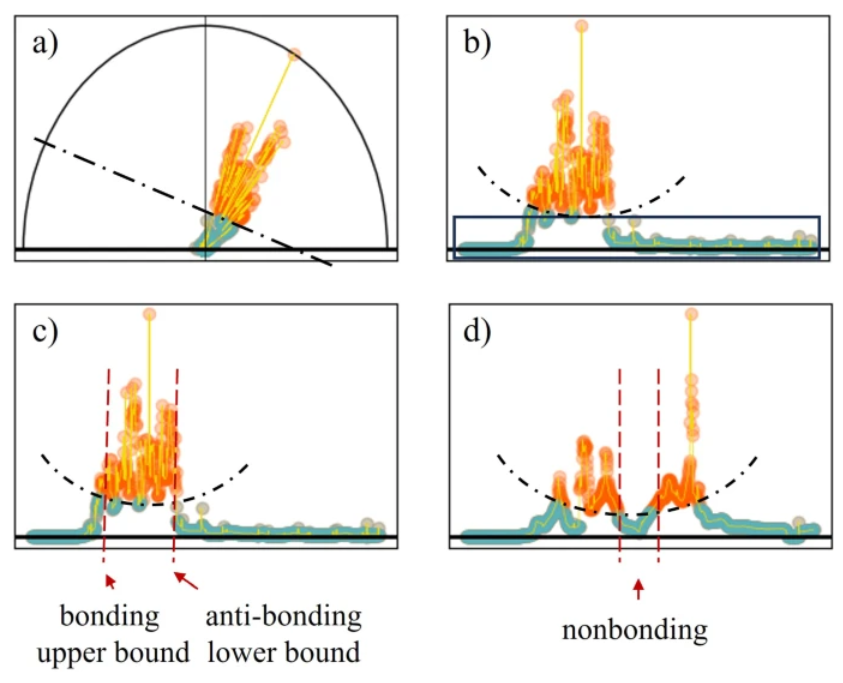
A new mathematical framework predicts how solid materials adsorb to surfaces, using five quantum-based indicators of their constituent atoms
Many areas of research are challenged by the need to explain the properties of materials based on the quantum behaviour of their atoms. One particularly difficult effect to describe is the adsorption of solid materials onto other solid surfaces. Currently, this is often approached using band-based models, which consider groups of electron energy level, or ‘bands’, in the atoms that make up a material. However, these models have limited accuracy, especially when trying to connect quantum details with practical outcomes.
In new research published in EPJ B, Yonghui Li and colleagues at Tianjin University, China, introduce a method that more accurately predicts how strongly atoms in a material will adsorb to other surfaces. Their approach is based on a set of five key indicators, offering a more complete picture of how adsorption is controlled by atomic electron bands. This could have wide-ranging applications in areas such as materials design, catalysis, and biological systems.
EPJ B Topical Review - High critical current densities of body-centered cubic high-entropy alloy superconductors: recent research progress
- Details
- Published on 30 April 2025

High-entropy alloys (HEAs) represent a novel paradigm in materials science. HEAs demonstrate a wide array of functionalities, including outstanding mechanical properties, superior corrosion resistance, and durable hard coatings. HEA superconductors have attracted considerable attention due to their distinctive attributes, such as robust superconductivity under extreme conditions and high critical current densities. Several body-centered cubic (bcc) HEAs have shown critical current densities comparable to those of commercial Nb-Ti superconducting alloys. HEAs possess the extraordinary capability to integrate multiple functionalities—a feature seldom observed in conventional alloys. Consequently, bcc HEA superconductors with elevated critical current densities are highly promising for practical applications in extreme environments, such as aerospace and nuclear fusion reactors, owing to the exceptional irradiation resistance characteristic of HEAs.
EPJ B Highlight - Modelling the electronic structure of single-doped perylene
- Details
- Published on 15 April 2025

The molecule perylene has exciting applications in the fields of organic electronics and astronomy
The molecule perylene has become of great interest to scientists developing organic electronics and technology which harnesses organic molecules or polymers with electronic properties like conductivity. Perylene has uses ranging from the creation of organic semiconductors to organic light-emitting diodes (OLEDs) to even building organic solar cells. In addition to this, perylene is of great interest to astronomers, as this molecule has been discovered in interstellar gases and nebulae, granting insights into the powerful cosmic events that forged and dispersed it.
EPJ B Highlight - Understanding speech with a new model of word recognition
- Details
- Published on 15 April 2025

Researchers found some surprising differences in the way humans handle long and short words
A new dynamical model of speech recognition has revealed the very different ways that humans perceive short and long words in everyday speech. The authors of the research published in EPJ B, Jean-Marc Luck of the Université Paris-Saclay and Anita Mehta, formerly of the Faculty of Linguistics, Oxford and currently at St Catherine’s College, University of Oxford, take a radically different approach to speech perception.
EPJ B Highlight - Exploring the high-temperature performance of cadmium chalcogenides
- Details
- Published on 13 March 2025

Through a combination of experimental and theoretical analysis, researchers have gained new insights into the thermal stability and degradation of cadmium chalcogenides at high temperatures.
Cadmium chalcogenides are an important family of materials in which cadmium (Cd) forms a chemical compound with either tellurium (Te), selenium (Se), or sulphur (S). These materials are known for their useful electronic properties, as well as their strong thermal stability and high natural abundance. Yet despite these useful properties, researchers still have much to learn about how cadmium chalcogenides perform at the high temperatures required for many practical applications
Through new analysis published in EPJ B, researchers led by Zalak Kachhia at Sarder Patel University, India, present a detailed exploration of the thermal properties of cadmium chalcogenides, revealing new insights into how these materials degrade above certain temperature limits.
EPJ B welcomes new Editor-in-Chief Philipp Hövel
- Details
- Published on 20 January 2025

The European Physical Journal B is glad to announce that Dr. Philipp Hövel (Saarland University, Saarbrücken, Germany) has been appointed as Editor-in-Chief for the section on statistical physics and complex systems.
Dr. Hövel will work alongside Prof. Egger to continue guiding and developing the journal.
The journal and the Publishers, take the opportunity to thank Prof. Heiko Rieger whose work and leadership have been invaluable.
EPJ B Topical Issue - New Trends in Statistical Physics of Complex Systems: Theoretical and Experimental Approaches
- Details
- Published on 14 January 2025
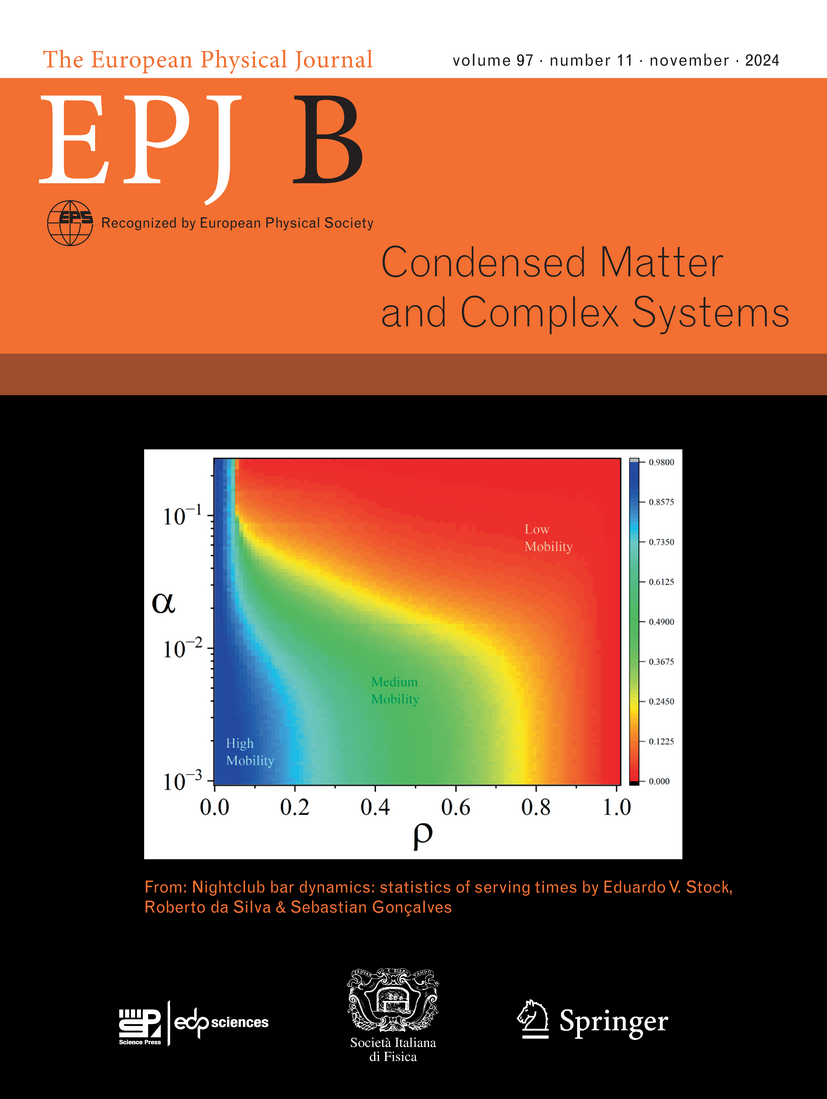
Guest Editors: Tiziana Di Matteo, Giorgio Kaniadakis, Antonio Scarfone, Gianpiero Gervino
This Topical Issue of EPJ B brings together a collection of articles on the recent progress of the theoretical aspects and application in statistical physics of complex systems.
A strong framework for comprehending the behavior of complex systems is provided by statistical physics. Complex systems have emergent properties, or global behaviors that result from local interactions but are difficult to reduce to their component parts. Numerous academic fields, including physics, biology, economics, and sociology, deal with complex systems. The brain's neural networks, ecosystems, social networks, financial markets, and even climate systems are a few examples. In this context, the main objective of statistical physics is to explain how microscopic interactions result in macroscopic properties like temperature, magnetization, or network connectivity. It accomplishes this by handling the numerous degrees of freedom present in complex systems using probabilistic techniques.
EPJ B Topical Issue - Quantum phase transitions and open quantum systems: A tribute to Prof. Amit Dutta
- Details
- Published on 13 December 2024
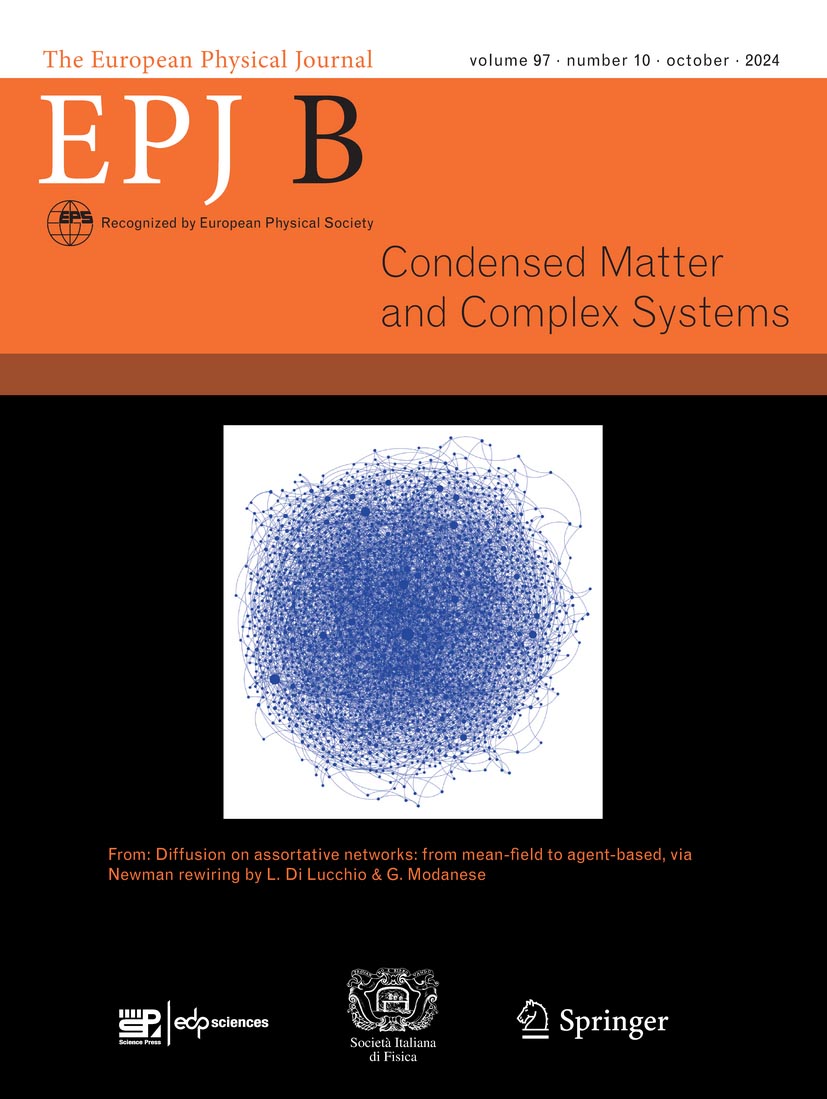
Guest Editors: Uma Divakaran, Ferenc Iglói, Victor Mukherjee & Krishnendu Sengupta
Prof. Amit Dutta, a theoretical physicist working at Indian Institute of Technology Kanpur, India, passed away in the beginning of the year 2023, leaving a void in the quantum condensed matter community, and also among his friends, family and colleagues. He was well known for his works on dynamics of quantum phase transitions and for his excellent teaching abilities; more recently, he had started working on open quantum systems as well.
This special issue is a dedication to Amit, bringing together articles on the areas he worked, starting from different types of non-equilibrium quantum dynamics to open quantum systems.
All articles are available here and are freely accessible until 13 February 2025. For further information read the Editorial.